Showing posts with label C.S. Lewis. Show all posts

Thursday, October 6, 2011

What Marriage Would C.S. Lewis Give?

[This is a post I did for another blog, but thought I'd put it here as well, just to keep all of my Lewis in the same sort of place]

Though it's just as unsurprising as hearing someone likes chocolate or sleeping in on Saturdays, I'll still say it: I love C.S. Lewis. When the marriage advice started rolling in after I got engaged, I wondered just what sort he give me. Our conversation may have gone something like this:

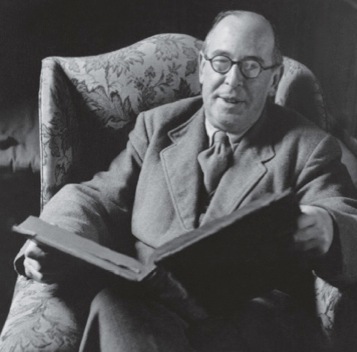
Setting: Imagine a wood-trimmed room with large-paned windows letting in a late morning's sun. The armchairs and warm-colored rugs tell of a space often-used and well-loved. A fire smolders in the corner hearth. Mr. Lewis, legs crossed and relaxed in posture, sits cradling a steaming cup while a young man, his bachelorhood now quite in jeopardy, sits across from him. The man's forward tilt divulges his eagerness for the marriage advice he's traveled so far to get. So does the forgotten cup of tea on a nearby table.

Unfortunately for him, he's passing up excellent tea.

Lewis: I think there are four ages about nearly everything. Let's give them names. They are the Unenchanted Age, the Enchanted Age, the Disenchanted Age, and the Re-enchanted Age. I suppose the most obvious application of these stages is love.

We all remember the Unenchanted Age - there was a time when women meant nothing to us. Then we fell in love; that, of course, was the Enchantment. Then, in the early or middle years of marriage there came - well, Disenchantment. All the promises had turned out, in a way, false. No woman could be expected to fulfill them all - the thing was impossible - I don't mean any disrepect either to my own wife or to yours.

Young Man: Does the Enchantment count for anything, then? I mean, if all the promises turn out false in a way, what good do they do us?

Lewis: It certainly counts. Whether there is, or whether there is not, in this world or in any any other, the kind of happiness which one's first experiences of falling in love seemed to promise, still, on my view, it is something to have had the idea of it at all. The promise of the Enchanted Age is that this woman is utterly angelic - all heaven without any earth. Even though this is false, in a way, there is still something deep within this promise which is true.

Young Man: Do you find out what is true in the Fourth Age - in the Re-Enchantment?

Lewis: There comes a time when you look back on that first mirage, perfectly well aware that it was a mirage, and yet, seeing all the things that have come out of it, things the boy and girl could never have dreamed of. You realize that it was telling you truths in the only form you would then have understood.

Romantic Love, having made his gigantic promises and shown you in glimpses what its performance would be like, has 'done his stuff.' He makes the vows; it is we who must keep them. It is we who must labour to bring our daily life into even closer accordance with what the glimpses have revealed. We must do the work of Romance when he is not present. This all lovers know. The glimpses of the Second Age aren't false, just incomplete. The error comes in thinking the part that they show us is the whole of what marriage will be like.

Young Man: But the Second Age seems the most satisfying - can one stay there?

Lewis: It seems that way to those who haven't been Re-enchanted. Many unfortunate efforts have been made to try to remain in the Second Age, but mortal lovers must not try stay there: for lasting rapture is the dream from which we wake in despair. This Romantic Love whose voice seems to speak from the eternal realm is not himself necessarily even permanent. We have all heard of people who are in love again every few years; each time sincerely convinced that 'this time it's the real thing," that their wanderings are over.

What you must remember is that the Second Age comes, but can't stay. The glories which we experience there are supposed by modern thinkers to be the basis for marriage but, all the while, they are really pictures of something God promises as its result. While there inevitably comes some Disillusionment from thinking all of marriage to be Enchantment, the Fourth Age in marriage is its sweetest season. It may be that you may pass in and out of these ages a few times in your life, but to be sure, the deep love - hinted at in the Romantic Stage - is worth waiting for and working for.

Young Man: And what of those times in Disenchantment? This seems to be where motivation is at a minimum.

Lewis: Well, those who are not reflective or articulate will be able to express it only in a few conventional phrases about "taking the rough along with the smooth," not "expecting too much," and having "a little common sense," and the like. And all good Christian lovers know that this programme, modest as it sounds, will not be carried out except by humility, charity, and divine grace; that it is indeed the whole of Christian life seen from one particular angle. One can be thankful and rejoicing in all the stages, but remember that love hits its crescendo when it is mature.

Young Man: This all sounds quite heady and abstract. How do big ideas help me at breakfast or when we're in the midst of an argument?

Lewis: Well, just as 12 inches fit into a foot (in your country), so the small strokes of life fit in the broad. Within a generality you find many particulars thus, these "big ideas" which seem impractical are the context for living each week's groggy Mondays. But if you are looking for a maxim that you could, this very hour, start attempting, here is one:

Sensible lovers laugh and, until they have a baby to laugh at, lovers are always laughing at each other. Marriage is serious, so serious that you cannot risk laughter's absence. Fun and play encourage charity, courage, contentment, and other virtues. Many things can be said about marriage, but this lighthearted word I give you: make sure laughter is often in yours.

Now, what do you say about us having a little more tea, hmm?

____________________
Sources: Many of Lewis' lines are direct quotes from his works. Where I needed to be brief, I added summary or interpretation of longer passages. If you are interested in reading from the sources themselves, they are listed below. All items are available on Amazon.

1. "Eros," The Four Loves.
2. "Talking About Bicycles," Present Concerns.
3. Chapter 11 &18, The Screwtape Letters.
4. (Minor influences on the article) The Pilgrim's Regress and "The Weight of Glory," The Weight of Glory.

Wednesday, February 9, 2011

On Letter Writing


C. S. Lewis was definitely a man of letters. His 3 volume collection of letters is over 3000 pages (while not exhaustive or too generous on white space). The introduction, by Walter Hooper, had two interesting notes on letter writing I'll share.


One: The auditory rhythm is important:

"When Lewis dictated letters to me, he always had me read them aloud afterwards. He told me that in writing letters, as well as books, he always 'whispered the words aloud.' Pausing to dip the pin in an inkwell provided exactly the rhythm needed. 'It's as important to please the ear,' he said, 'as it is the eye.'"

While he didn't always please the eye (in terms of legibility), it's hard to deny that he's readable. In fact, I just reread the previous sentence and found it read better with an edit. Point, Lewis.

Two: Having something to say sure is nice:

"Jack wrote to him [his brother Warnie] in March 1921, 'Perhaps one of the reasons why letters are so hard to write and so much harder to read is that people confine themselves to news - in other words think nothing worthing writing except that which would not be worth saying.'"

It seems like there are two types of things one can discuss: news and ideas. Perhaps the better letters have both.


Now, write me a letter.

Tuesday, February 8, 2011

Perhaps My Eyes Were Too Big


A coworker of mine is incredibly diligent (a quality we really appreciate at work). Two years back, she showed me her goals for the upcoming year. It included some easy obstacles and some challenging, but none were too outlandish. She even wrote down that she planned to graduate with her master's degree - something that was pretty much in the bag at that point. "It's still a goal of mine for 2010, so I'm writing it down."

I'd often started years with resolutions which didn't last very long, but there was something appealing in her list and I gave it another go. To my surprise, I finished some significant goals and felt the list helping. Unsurprisingly, I didn't finish them all (the list can only do so much). As 2011 rolled around, I decided to write down some new ones.

I won't tell you all of them right here, but here's where my eyes were perhaps a little too big: I want to end 2011 having finished every CSLewis book I own. I counted all of the pages I have to read to get this done and, though I'll keep the number to myself, it's in the thousands and is closer to 10K than 1K.

I'm telling you this for a specific reason: I'm about to do a ton of blogging about CSLewis. A ton. Well, maybe a ton. There's something about Lewis in particular that makes me want to write and I thought about generating an entirely new blog about it. Instead, I'm just giving you a heads up. So, heads - it's coming.

Probably.

Sunday, February 22, 2009

Friendship in Prayer

I have two things to say about prayer and friendship.

First:

C.S. Lewis wrote the following in a chapter on Friendship:

"Lamb says somewhere that if, of three friends (A, B and C), A should die, then B loses not only A but 'A's part in C,' while C loses not only A but 'A's part in B.'  In each of my friends there is something that only some other friend can fully bring out.  By myself I am not large enough to call the whole man into activity; I want other lights than my own to show all his facets.  Now that Charels is dead; I shall never again see Ronald's reaction to a specifically Caroline joke. Far from having more of Ronald, having him 'to myself' now that Charles is away, I have less of Ronald.  Hence true Friendship is the least jealous of loves.  Two friends delight ot be joined by a third and three by a fourth, if only the newcomer is qualified to become a real friend.  They can then say, as the blessed souls say in Dante,' Here comes one who will augment our loves.' For this love 'to divide is not to take away.' . . . We possess each friend not less but more as the number of those with whom we share him increases.  In this, Friendship exhibits a glorious 'nearness by resemblance' to Heaven itself where the very multitude of the blessed . . . increases the fruition which each has of God.  For every soul, seeing Him in her own way, doubtless communicates that unique vision to all the rest.  That, says an old author, is why the Seraphim in Isaiah's vision are crying 'Holy, Holy, Holy' to one another (v. 6:3).  The more we thus share the Heavenly Bread between us, the more we shall all have."

One's personal times of prayer are well to be commended.  Both from the pulpit and devotional writings, the benefit and necessity of the prayer closet are highlighted - indeed our Lord Himself shows the Father's delight in this practice (Matt. 6:5-6).  Private prayers reveal to us the intimacy with Christ that we may have forgotten throughout the day.  It allows us to disclose and expose the contents of that private, inner chamber which only the two of us see (thoughts, desires, pains, joys).  But there is something wonderful, too, about corporate prayer.

Corporate prayer allows a different sort of intimacy - that of allowing Christ to reveal more of Himself.  When I pray alone, I see Christ as I see Christ, but when I pray with you, we get glimpses of Christ through each other's eyes.  Perhaps this is a small part of what our Savior meant when He pledged to be "among us" when we gather "in His Name."
________
Second:

Our friend, CS, surfaced the difference between friendship love and romantic love through a distinction of focusing.  In romance, the pair faces each other in transfixion - each gazing into the other's soul - one gets the picture of deep and intimate knowing.  Friends stand shoulder to shoulder, having a common gaze, but of a different sort than that of the lovers for, while the latter shares a common causeway of vision (i.e., that of looking along the same corridor into the other's eyes), the former has a common object of sight.  The friends aren't necessarily drawn to one another because of an appreciation of the intricacies of the other's soul (though the quality of the soul is doubtlessly an essential component), but out of mutual appreciation for something other than themselves.

This is why a group of friends can be so diverse - the main requirement for membership hasn't been a demographic of the past or of circumstances, but a demographic of desire.  And, perhaps, this too gives us some insight into why we find praying together to often bond us - we come together because we mutually desire Christ and, in traversing the same road towards Him, those that travel alongside us become valued companions.

Thus, I think our Lord and His friend, C.S. Lewis, commend praying together to us all, for it is in such activity that we get more of Him and He gives us more of each other.